
Why Your Retirement Plan Will Fail Without the Right Asset Allocation
Imagine this: you have spent years diligently saving for retirement. You have a solid portfolio of stocks and bonds, ready to support your golden years. But suddenly, market volatility hits, and your carefully crafted plan starts to unravel. This scenario is more common than you might think, and it often comes down to one crucial factor: asset allocation.
Many people underestimate the role of asset allocation in their retirement plans. They believe that as long as they are saving regularly and investing wisely, they are set. However, asset allocation is the foundational ingredient that can make or break your retirement strategy.
Understanding Asset Allocation
Asset allocation is the strategy of dividing your investments among various asset classes such as stocks, bonds, and real estate to balance risk and reward. Think of it as a recipe: just as you would not bake a cake with only one ingredient, you should not invest with only one type of asset. A well-balanced portfolio includes a mix of asset types, each serving a different purpose in your overall strategy.
The Consequences of Poor Asset Allocation
Neglecting asset allocation can lead to significant risks. Imagine investing all your savings in a single stock because it has been performing well. If that stock plummets, so does your retirement fund. This is a risk that could have been mitigated with proper diversification.
Consider an investor who put almost all of his investments into tech stocks, believing they would continue to soar. When the tech bubble burst, he found himself facing a substantial loss. Had he diversified across various asset classes, he could have weathered the storm much better. Diversification helps spread risk and reduce the impact of market downturns.
The Impact of Market Volatility
Market volatility can be unsettling, especially if you are nearing retirement and have a significant portion of your portfolio in high-risk assets. Asset allocation helps manage this volatility by balancing high-risk investments with more stable ones.
During the 2008 financial crisis, investors with diversified portfolios fared better than those who had all their money in stocks. Bonds and real estate typically offer more stability and can act as a buffer against market swings. By including these assets in your allocation, you protect yourself from severe losses during turbulent times.
The Discipline Factor
Discipline is key when it comes to asset allocation. It is tempting to chase after high returns or panic during market downturns, but these actions can undermine your strategy. Sticking to your allocation plan, even when the market seems unstable, is crucial for long-term success.
An investor who frequently moves investments around based on short-term market trends will end up with a less stable portfolio than one who adhered to a disciplined asset allocation strategy. Regular rebalancing, which means adjusting your portfolio to maintain your desired allocation, ensures that you stay on track with your retirement goals.
Tailoring Asset Allocation to Your Life Stage
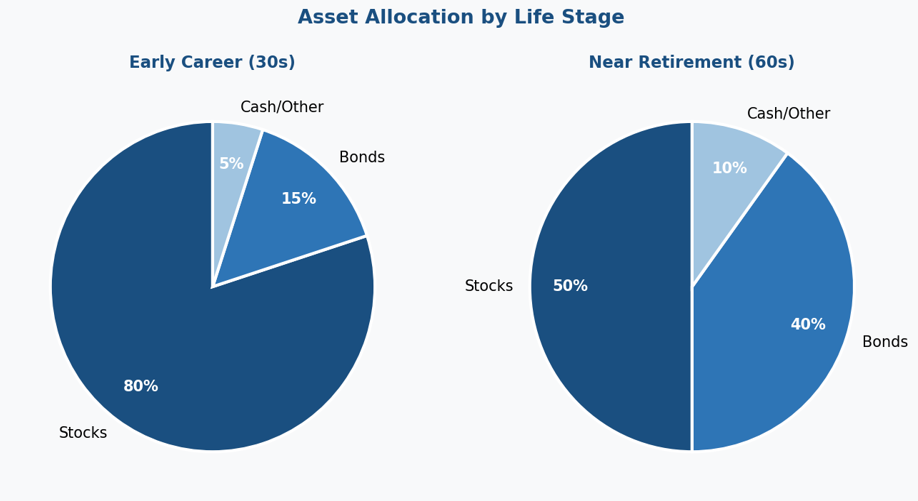
Asset allocation is not one size fits all. It should be tailored to your specific life stage and risk tolerance.
• For Millennials: You have the advantage of time. You can afford to take more risks with growth-oriented investments such as stocks because you have years to recover from potential losses. Think of your portfolio as a long-term growth project, one you are nurturing to grow tall and strong over decades.
• For Generation X: As you approach retirement, it is crucial to shift toward more stable investments. Balancing growth with safety means incorporating bonds and income-producing assets into your portfolio. It is like preparing for a marathon. You want to ensure you have the stamina to finish strong without overextending yourself.
Actionable Steps to Improve Your Asset Allocation
• Assess Your Current Allocation: Review your investments to see if they align with your retirement goals and risk tolerance.
• Rebalance Your Portfolio: Adjust your investments to maintain your desired asset mix. This might involve shifting some funds from stocks to bonds or vice versa, depending on what market performance has shifted since your last review.
• Seek Professional Advice: A financial planner at KLD can help you create a personalized asset allocation strategy that suits your specific needs and goals.
Asset allocation is a crucial part of a successful retirement plan. Without it, you are leaving your financial future to chance. By understanding its importance and maintaining a disciplined approach, you can protect your retirement savings and ensure a more secure and enjoyable retirement.
At KLD Wealth Management, building and maintaining an appropriate asset allocation is one of the core functions of the financial planning process for every client.