
Why You Value What You Own Too Much: Understanding the Endowment Effect in Personal Finance
Have you ever tried selling something you own and been shocked when people offered far less than what you thought it was worth? Whether it’s a used car, a family heirloom, or even a stock you’ve held onto for years, you may be experiencing something called the endowment effect.
The endowment effect is a cognitive bias where people place a higher value on things simply because they own them. Once we become emotionally attached to something, it becomes difficult to view it objectively.
In personal finance, this bias can quietly interfere with decision making in major ways. It can lead people to hold onto underperforming investments, keep property that no longer fits their financial goals, or refuse to part with assets that are draining their finances, all because of the emotional value attached to them.
If you want to make smarter financial decisions and stay focused on long term success, understanding this bias is extremely important. In this blog, we’ll look at what the endowment effect is, how it shows up in personal finance, and how proper financial planning can help you avoid letting emotions dictate your financial decisions.
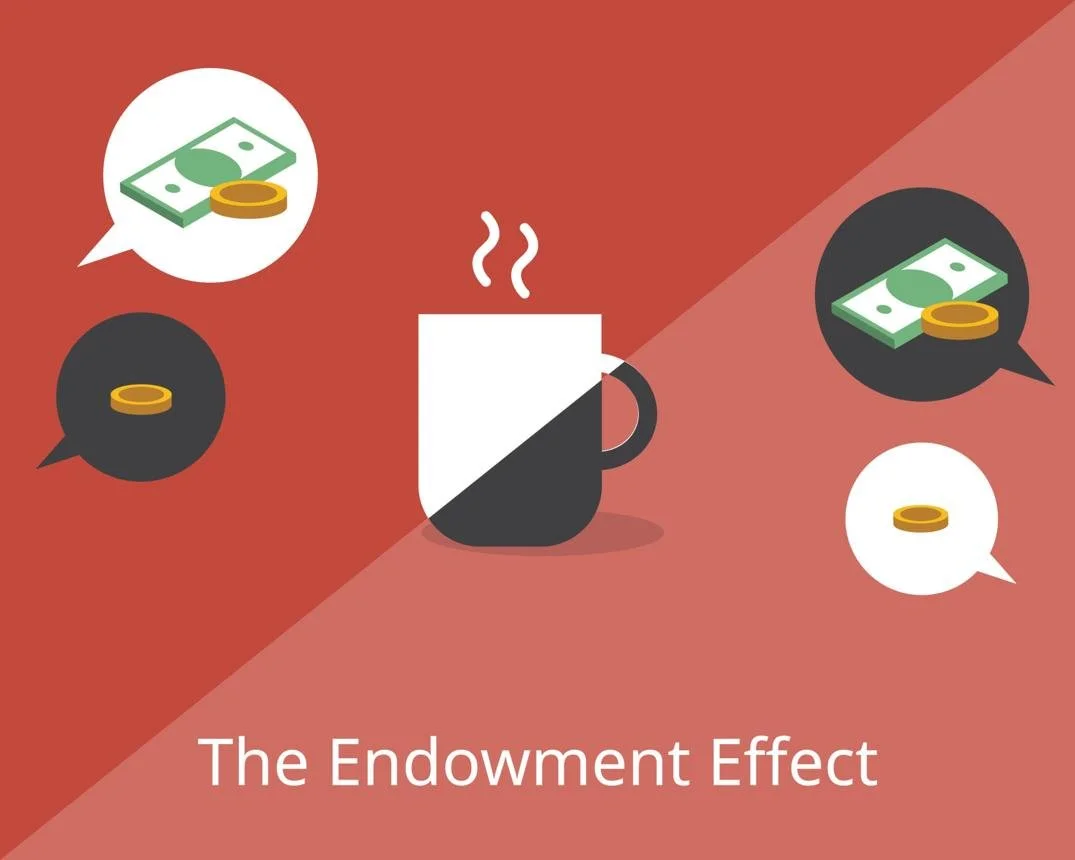
What is the Endowment Effect?
The endowment effect is a psychological bias that causes people to overvalue things simply because they own them. It’s why someone may believe their old couch is worth $500 while potential buyers only see it as a $200 piece of furniture.
Once memories, time, or emotional attachment become tied to something, it starts to feel more valuable than its actual market price.
This emotional attachment often has very little to do with objective value. The same thing happens with financial assets such as homes, investments, collectibles, and businesses. The longer we own something, the harder it becomes to evaluate it rationally.
Instead of looking at assets based on performance or market value, emotions begin influencing decisions. That emotional connection can cloud judgment and cause people to hold onto things that no longer make financial sense.
The Endowment Effect in Personal Finance
This bias can show up in several areas of your financial life and often works against long term financial goals.
1. Home Ownership: Your home is more than just a financial asset. It’s where memories were made, where time and effort were invested, and where major life moments happened. Because of that emotional connection, many homeowners overprice their homes when selling. Instead of relying on what the market says the home is worth, they focus on personal attachment and what they believe it deserves to sell for.
2. Investment Portfolios: The endowment effect often appears in investing when people hold onto stocks or investments longer than they should. An investor may refuse to sell because they believe the investment will eventually recover, even when data suggests moving on would be the smarter decision. Once people own an investment, they often become emotionally attached to it and assign it more value than it objectively deserves.
3. Heirlooms and Estate Planning: Family heirlooms carry emotional significance in addition to monetary value, which can complicate estate planning decisions. Items may be valued much higher emotionally than financially, making it difficult to divide assets fairly among heirs or decide whether certain items should be sold.
4. Business Ventures: Business owners are especially vulnerable to the endowment effect because of the amount of time, energy, and emotion invested into building a company. When it comes time to sell, owners may expect a much higher price than buyers are willing to pay. Emotional attachment can also cause people to hold onto failing businesses longer than they should or reject reasonable offers because they feel undervalued.
Why We Fall for the Endowment Effect
The endowment effect is rooted in several powerful psychological tendencies that influence the way people think about money and ownership.
· Emotional Attachment: We naturally connect memories and emotions to the things we own, which can distort how we view their financial value.
· Loss Aversion: Losing something we already own often feels more painful than the excitement of gaining something new. This makes it difficult to let go of assets even when holding onto them no longer benefits us financially.
· Status Quo Bias: People tend to stick with what they already have because change feels uncomfortable. Familiarity often feels safer, even when it is not helping long term progress.
How Financial Planning Helps Reduce the Endowment Effect
The good news is that a strong financial plan can help reduce the emotional influence of the endowment effect and create more objective decision making.
1. Objective Valuations: One of the best ways to overcome emotional bias is by getting objective third party valuations. For example, a professional appraisal can help homeowners understand what a property is realistically worth instead of relying on emotional attachment. The same applies to investment portfolios and business valuations.
2. Diversified Investment Strategies: Diversification not only helps manage investment risk, but it also helps reduce emotional attachment to individual assets. When your portfolio is balanced properly, it becomes easier to make rational decisions and avoid holding onto underperforming investments simply because you own them.
3. Regular Financial Reviews: Consistently reviewing your financial plan can help you reassess your decisions with a fresh perspective. Looking at investments, property, or estate plans regularly makes it easier to identify assets that no longer align with your long term goals.
4. Setting Sell Rules for Investments: Predetermined selling rules can help remove emotion from investment decisions. For example, setting performance thresholds or exit strategies ahead of time allows you to make decisions based on data instead of emotional attachment.
Reducing the Influence of Cognitive Biases
Avoiding the endowment effect starts with recognizing when it is influencing your decisions and creating systems that help reduce its impact.
· Awareness and Education: Understanding how the endowment effect works makes it easier to recognize when emotions are influencing financial decisions.
· Consulting a Financial Planner: An outside perspective from a fee only financial planner can help you evaluate decisions more objectively and avoid emotional attachments.
· Data Driven Decision Making: Whenever possible, decisions should be based on objective information such as market data, projected returns, and financial analysis instead of emotional feelings toward an asset.
Focus on Long Term Financial Goals
The endowment effect is a powerful bias that can quietly interfere with smart financial decision making. But when you recognize it and build systems to reduce emotional decision making, you can make choices that better support your long term financial future.
At KLD Wealth Management, the focus is on helping clients make objective, strategic decisions that align with their long term goals rather than emotional reactions.