
Why All Dollars Aren’t Equal: Understanding Mental Accounting in Personal Finance
Ever found yourself using a tax refund for a spontaneous splurge while stressing about paying down debt at the same time? Or maybe you save carefully from each paycheck, only to spend birthday money or bonuses on things you normally wouldn’t buy? If so, you’re not alone. That’s mental accounting in action.
Mental accounting is a cognitive bias that causes people to treat money differently depending on where it came from, how they plan to use it, or how they mentally label it.
Why All Dollars Aren’t Equal: Understanding Mental Accounting in Personal Finance
Have you ever used a tax refund for a spontaneous splurge while also stressing about paying down debt? Or maybe you save carefully from each paycheck, but then spend birthday money or a bonus on things you would never normally buy. If that sounds familiar, you are not alone. You may be experiencing mental accounting.
Mental accounting is a cognitive bias that causes us to treat money differently based on where it came from, how we plan to use it, or how it is labeled in our minds.
In reality, every dollar has the same value, no matter where it came from.
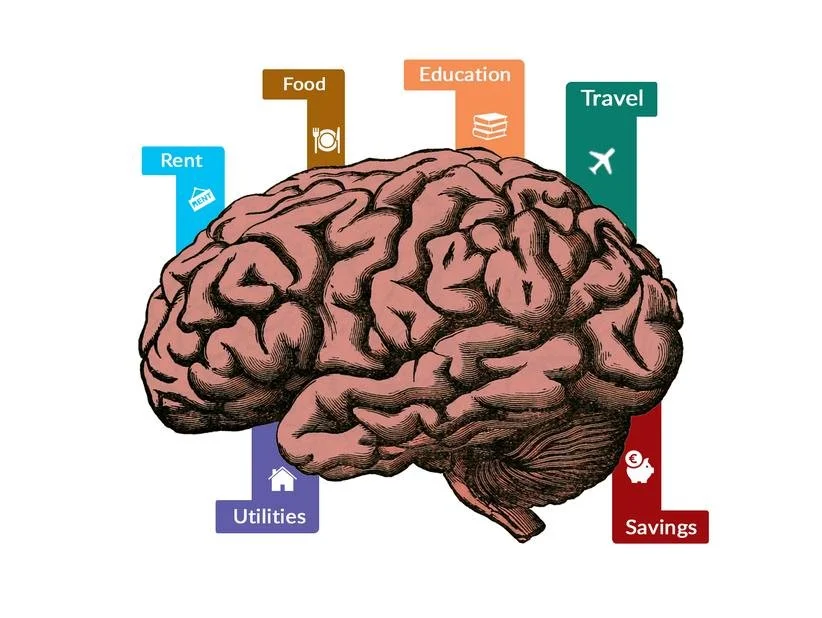
But our brains do not always see it that way. We create mental “buckets” for our money, like separating “fun” money from “serious” money, even though financially speaking, all dollars are interchangeable.
Mental accounting can make us feel organized and in control, but it often leads to poor financial decisions. You might use a year end bonus to splurge on a vacation while ignoring high interest debt. Or you might keep too much cash in a low yield savings account because it is labeled as your “emergency fund,” even when some of that money could be used more effectively elsewhere. In these cases, mental accounting is not just a harmless habit. It can hold you back from optimizing your finances and reaching your goals faster.
In this blog, we will look at what mental accounting is, how it affects your financial behavior, and how personal financial planning can help you break free from this bias. When you learn to view your money as part of one unified plan, no matter where it came from or how you want to spend it, you can make decisions that better support your long term financial health. Because in personal finance, a dollar is always a dollar, unless you let mental accounting tell you otherwise.
What is Mental Accounting?
Mental accounting is a cognitive bias that makes people categorize and treat money differently based on its source, its intended use, or the labels they mentally assign to it. This can seem harmless, and at times even helpful, but it often leads to irrational and inefficient financial choices.
In other words, we do not always treat all money equally, even though from a strictly financial perspective, a dollar is a dollar no matter where it came from or what account it is sitting in.
So what does mental accounting look like in real life? Imagine you receive a $1,000 bonus at work. Instead of putting it toward credit card debt with a 20% interest rate, you decide to treat yourself to a luxury weekend getaway because it feels like “bonus” money. But financially, your debt is still sitting there, collecting interest and slowing you down. That bonus could have been used to significantly reduce your debt burden, but because it felt like “extra” money, it was spent instead of used strategically.
Mental accounting causes us to assign different levels of importance to different “buckets” of money. This distorts the way we view our total financial picture and can prevent us from making decisions that maximize our overall net worth.
How Mental Accounting Works
To understand how mental accounting plays out, think about how people typically categorize their money. There are often different mental “accounts” for different purposes, such as:
· “Everyday Spending” Money: Regular income used for monthly expenses like groceries, utilities, gas, and other routine costs.
· “Serious” Money: Money set aside for responsible financial moves, such as retirement accounts, emergency savings, student loan payments, or debt reduction.
· “Fun” Money: Bonuses, gifts, tax refunds, or small windfalls that often feel easier to spend on non essential purchases, vacations, or luxury items.
· “Untouchable” Money: Money like an emergency fund or inheritance that you mentally set aside as off limits, even when using some of it may make financial sense, such as paying off high interest debt.
While these categories can help us feel organized, they also create silos that prevent us from managing money efficiently. For example, you might have thousands of dollars sitting in a vacation fund while struggling to pay down high interest debt or skipping retirement contributions. The issue is that you are thinking about your finances in isolation instead of viewing them as one connected plan.
Everyday Examples of Mental Accounting
To see how mental accounting affects daily financial decisions, consider these common scenarios:
1. Treating a Bonus or Gift Differently: Imagine receiving a $500 year end bonus from work. You would not normally use your regular paycheck for a random splurge if bills or savings goals were waiting, but because this money feels different, you may be tempted to buy a new gadget, go out for a fancy dinner, or take a weekend trip. Meanwhile, that same $500 from regular income may have gone toward a credit card bill or savings. That difference in behavior is a classic example of mental accounting.
2. Overspending on Windfalls: Lottery winners, inheritance recipients, or people who receive large bonuses often burn through money quickly because they view it as “extra.” Since the money feels separate from everyday finances, it becomes easier to spend freely, take on new expenses, or make decisions they would normally avoid. Instead of viewing the windfall as part of total net worth, they treat it like a short term spending opportunity.
3. Different Accounts, Different Rules: Many people use separate accounts for different purposes, such as an emergency fund, house savings, vacation savings, and a spending account. That can be helpful for budgeting, but it can also create mental barriers. You may refuse to use an emergency fund even when doing so would prevent high interest credit card debt. Or you may freely spend from an entertainment account while being overly cautious with your main savings.
4. Credit Card vs. Cash Spending: Mental accounting also affects how we spend based on payment method. People often spend more with credit cards than with cash because using a card feels less tangible than handing over physical money. This mindset can lead to overspending on non essentials and accumulating debt because it does not feel like “real money” in the moment.
The Downside of Mental Accounting in Personal Finance
At its core, mental accounting causes us to view our finances through a distorted lens. Instead of seeing money as one unified resource to be used strategically, we divide it into arbitrary categories that make some funds feel more valuable or restricted than others.
This compartmentalized thinking may seem harmless, but it can lead to decisions that hurt long term financial health.
· Missed Opportunities for Growth: You may have cash sitting in a low interest account because it is “earmarked” for a future expense, even though that money could potentially be used more effectively.
· Inconsistent Saving and Spending Habits: Mental accounting can make you strict with your salary but loose with bonuses, gifts, or refunds, creating uneven financial habits.
· Increased Risk Exposure: Treating some money as “play money” may encourage speculative investments that do not fit your overall strategy.
Mental accounting can create a sense of control, but if it is not managed properly, it can quietly sabotage your financial goals. The next step is understanding how this bias affects personal finance and why it can be so difficult to overcome.
How Mental Accounting Affects Personal Finance
Mental accounting may seem harmless. After all, organizing your money into categories can feel responsible. But the way you mentally label money can have a major impact on your overall financial health.
When you assign different levels of importance or purpose to different “accounts” in your mind, your decisions can become disconnected from your broader financial picture. This often leads to inefficiencies, missed opportunities, and financial mistakes.
1. Inefficient Cash Flow Management: Mental accounting can cause a poor allocation of resources. For example, you may have a large emergency fund earning very little interest while also carrying credit card debt at 18% or 20%. Your emergency fund is important, but keeping too much cash there while paying high interest debt can cost you more over time. Rather than viewing all your money as one pot that should reduce debt and support growth, mental accounting can keep money trapped in categories that no longer make sense.
Example: Let’s say you have $15,000 in a rainy day fund earning 0.1% interest while carrying $10,000 in credit card debt at 20% interest. Mentally, keeping the emergency fund untouched may feel safer. But financially, paying off the debt could save around $2,000 in interest each year. That is a major opportunity cost created by reluctance to touch the “emergency” account.
2. Misallocation of Windfalls: One of the most common forms of mental accounting is how people treat windfalls, such as bonuses, tax refunds, or inheritances. These often feel like “extra” money, so people are more likely to spend them impulsively, even if they would not do the same with regular income. Instead of using a tax refund to build savings or pay down debt, it may become vacation money, gadget money, or impulse spending.
Example: A person who receives a $3,000 tax refund and uses it for a designer handbag instead of contributing to an underfunded retirement account is engaging in mental accounting. If that $3,000 were invested for 20 years with a 7% annual return, it could grow to more than $11,000. But because it felt like bonus money, it was spent instead.
3. Inconsistent Spending and Saving Patterns: Mental accounting often leads to inconsistent financial behavior because different mental accounts come with different rules. You may be strict with dining out money but feel free to spend the full vacation budget, even if your total discretionary spending is too high. This creates an illusion of control, but it can make your finances harder to manage.
Example: Suppose you set aside $200 a month for eating out and $500 for entertainment. If you spend $250 dining out, you may still spend the full $500 on entertainment because it feels like a separate category. The problem is that both categories come from the same income, so the total spending still matters.
4. Risky Investment Choices: Mental accounting also appears in investing. Some people create a “play money” account for speculative investments and justify taking risks they would never take with their main portfolio. While this may feel separate, losses in that account still affect total net worth.
Example: An investor who puts 10% of a portfolio into speculative crypto investments because it is “just play money” may ignore the fact that a major loss still impacts their overall financial position. Separating the money mentally can make the risk feel smaller than it really is.
5. Not Taking a Holistic View of Finances: The biggest problem with mental accounting is that it prevents you from seeing your financial life as a whole. You may focus on growing a vacation fund while ignoring retirement contributions, or protect one account while letting another become inefficient. Without a unified strategy, decisions become reactive instead of intentional.
Why Do We Fall for Mental Accounting?
Mental accounting is one of the most common financial biases, and it can be one of the hardest to break. That is because it is tied to emotion, control, habits, and social expectations. Understanding why we fall for it is the first step toward managing it.
1. Emotional Attachment: When we categorize money into mental buckets, we often attach emotions to it based on its source or purpose. A tax refund feels different from a paycheck because it can feel like a reward. An inheritance may feel more meaningful than ordinary savings. Those emotions can distort judgment.
Example: If you receive $2,000 as a wedding gift, you may view it as celebration money and spend it on something special, even if using it to pay down student loans would be the smarter financial move.
2. Loss Aversion: The pain of losing money often feels stronger than the pleasure of gaining money. Mental accounting can act like a defense mechanism that protects people from the discomfort of seeing a certain account balance drop.
Example: You may have $5,000 saved for emergencies, but when your car needs a $1,200 repair, you put it on a credit card instead because touching the emergency fund feels like losing security. In reality, the credit card interest may cost far more.
3.. Control and Organization: Mental accounting gives people the illusion of control. Separating money into categories like vacation, house savings, and everyday expenses can make finances feel organized. But it can also lead to irrational decisions when one account sits idle while another area creates financial strain.
Example: You may have $10,000 sitting in a new car fund while struggling with a $7,000 credit card balance at 18% interest. Moving some of that money to reduce debt would make sense financially, but it may feel wrong because the money has already been mentally assigned.
4. Sunk Cost Fallacy: Mental accounting is closely tied to the sunk cost fallacy. Once money is assigned to a purpose, it becomes harder to reallocate it, even when circumstances change. Past decisions start to control current choices.
Example: You may have paid a $2,000 non refundable deposit for a luxury vacation, but then unexpected medical bills appear. Instead of accepting the lost deposit, you spend even more to complete the trip because you want to justify the original expense.
5. Social and Cultural Pressures: Society also influences how people think money should be used. For example, inheritances are often seen as money for the future, home buying, or family goals, even if using that money to pay off high interest debt would be more helpful.
Example: You receive an inheritance and feel pressure to invest it conservatively because it feels like “future money.” Meanwhile, you are struggling with a high interest auto loan. Paying off the loan may create immediate relief, but it may feel like the wrong use because of the mental label attached to the inheritance.
Breaking Down the Mental Barriers
Mental accounting is deeply ingrained because it simplifies complicated decisions and gives us a sense of order. But that order can come at the expense of efficiency.
Breaking free from mental accounting means learning to view every dollar as part of one larger financial picture. With the right tools and planning, you can make decisions that maximize your resources no matter where the money came from or what label it has been given.
How Personal Financial Planning Can Help Overcome Mental Accounting
Mental accounting may feel natural, but it often leads to inefficient decisions. Personal financial planning can help you step back and view your entire financial picture clearly. Instead of treating money as separate mental accounts, a plan gives you a structured framework for deciding how each dollar should support your long term goals.
1. Create a Unified Financial Plan: A comprehensive financial plan brings salary, bonuses, savings, investments, and windfalls into one cohesive strategy. This makes it easier to see how every dollar fits into the bigger picture instead of being separated into individual mental accounts.
Example: If you are holding a large vacation fund while making minimum payments on a credit card, a unified plan may show that redirecting some of that money toward debt could reduce interest and speed up your payoff timeline.
2. Establish Clear, Long Term Goals: Mental accounting often happens when there is no clear purpose for money. When your goals are defined, every dollar can be evaluated based on whether it helps move you closer to those priorities.
Example: If your goal is to buy a house in five years, your year end bonus becomes part of your down payment strategy rather than automatic “fun money.”
3. Develop a Consistent Saving and Spending Strategy: A personal financial plan can help create rules for how to treat money regardless of where it came from. For example, you might decide that every windfall gets split between savings, debt repayment, and discretionary spending.
Example: If you receive an unexpected $5,000 inheritance, a consistent plan might allocate part to retirement savings, part to debt repayment, and part to something enjoyable. This balances emotion with strategy.
4. Regularly Review and Rebalance Your Financial Plan: Your financial strategy should adapt as your life changes. Regular reviews help prevent old mental categories from controlling current decisions. They also help ensure that your resources are still aligned with your most important goals.
Example: A review may reveal that your cash reserves have grown too large while your investment accounts have stalled. Reallocating excess cash can improve growth potential and reduce inefficiency.
5. Introduce Objectivity With an Outside Perspective: One of the biggest benefits of working with a fee only financial planner is getting an objective perspective. A planner can help you see where emotional categories are distorting decisions and offer strategies for using money more effectively.
Example: If you have $20,000 sitting in a future business fund while carrying student loan debt, a planner may help you rethink the category and use some of that money to reduce debt, freeing up future cash flow.
Strategies to Reduce Mental Accounting
Understanding mental accounting is one thing. Overcoming it takes action. These practical strategies can help you move away from mental buckets and toward a more unified financial mindset.
1. Use a Single “Money Pot” Mindset: Instead of thinking of money as vacation money, bonus money, or gift money, view it all as part of your net worth. This helps you make decisions based on your total financial picture.
How to Implement This: Consolidate unnecessary small accounts where appropriate and simplify your finances into broader categories, such as emergency savings, short term goals, and long term investments.
2. Prioritize High Impact Financial Goals: Before deciding how to use a bonus, refund, or windfall, ask what the highest and best use is. Often, that may be paying down high interest debt, building emergency savings, or investing for the future.
How to Implement This: Create a predefined system for windfalls, such as sending a portion to high impact goals and allowing a smaller portion for discretionary spending.
3. Regularly Review and Rebalance Your Mental Accounts: Even if you cannot eliminate mental accounting completely, you can reduce its impact by reviewing whether your categories still make sense. Ask whether each bucket is helping you reach your goals.
How to Implement This: Set a reminder to review your financial plan every six months and be willing to shift money between categories when your priorities change.
4. Seek an Outside Perspective: When you are close to your own money, emotions can cloud judgment. A professional financial planner can help identify inefficiencies and challenge assumptions that may be holding you back.
How to Implement This: Schedule a consultation to review your full financial picture and be open to suggestions that may challenge your mental rules.
5.. Implement the “Interchangeable Dollar” Rule: Treat every dollar as equally valuable, whether it comes from a paycheck, bonus, gift, or refund. This helps prevent emotional labels from driving financial decisions.
How to Implement This: When you receive a windfall or non salary income, apply the same decision making standards you would use for regular income.
6. Automate Your Saving and Investing Decisions: Automation can reduce the influence of mental accounting by directing money toward important goals before emotion enters the decision.
How to Implement This: Set up automatic transfers to savings and investment accounts based on your financial plan so money is allocated by strategy, not impulse.
Ready to Break Free from Mental Accounting?
It is easy to fall into the mental accounting trap. Most people do it in some way. But breaking free from this bias is important if you want to maximize your financial potential.
Ask yourself: Are you categorizing money based on emotion rather than logic? Are you splurging with “bonus” money while stressing about debt? Are you holding too much cash in “safe” accounts when it could be used more effectively?
If that sounds familiar, it may be time to step back and look at the bigger picture. Treating every dollar equally and viewing your finances as one connected whole can dramatically improve your financial health.
At KLD Wealth Management, the goal is to help clients build personalized financial plans that break down mental silos, prioritize high impact goals, and create a unified strategy for long term success.
This is where working with a fee-only financial planner can make all the difference.
· Break down mental silos and treat all money with equal importance.
· Prioritize goals like debt repayment, emergency savings, and investing.
· Create a unified strategy that aligns your resources with your long term objectives.
· Review and rebalance your plan as your goals and circumstances evolve.
Ready to stop thinking in mental “buckets” and start building a cohesive financial Strategy?
Let’s get started! Schedule a consultation today, and let’s build a plan that ensures every dollar is working toward your financial success. Because when you eliminate mental accounting, you gain the clarity, control, and confidence to make smarter, more impactful financial decisions—decisions that will help you achieve your goals faster and more effectively.