
Breaking Free from the Sunk Cost Trap in Personal Finance
Ever found yourself finishing a terrible movie just because you paid for the ticket? Or holding onto an expensive gym membership you barely use because you already spent the money?
If so, you’ve run into the sunk cost fallacy. In personal finance, this bias can quietly lead to poor decisions while making you feel like you’re being responsible.

What is the Sunk Cost Fallacy?
Let's start with the basics. The sunk cost fallacy is our tendency to continue investing in a losing proposition because of the resources we've already committed—be it time, money, or effort—rather than cutting our losses and moving on. It's like insisting on wearing those uncomfortable shoes because they were expensive, even though they give you blisters every time. Rational? Not exactly.
Instead of making decisions based on what makes sense today, you base them on what you’ve already spent.
The Sunk Cost Fallacy in Personal Finance
Now, let's dive into how this manifests in our financial lives.
1. Investment Woes
Imagine you've invested in a stock that's been dropping like a lead balloon. Instead of re-evaluating its prospects, you hold onto it tightly, thinking, "I can't sell now; I'd lose too much money!" So, you watch it decline further, all the while refusing to let go because selling would mean admitting defeat. Spoiler alert: Stocks don't have feelings, but your portfolio does.
2. The Never-Ending Home Renovation
You bought a fixer-upper, envisioning a dream home after a few upgrades. But what started as a simple kitchen remodel has snowballed into a whole-house renovation. Costs are spiraling, but you keep pouring money into it because, well, you've already spent so much. Before you know it, you've got the most luxurious (and overpriced) house on the block, but your budget is in shambles.
3. Subscription Traps
Do you have subscriptions to magazines you don't read, apps you don't use, or streaming services you forgot existed? Continuing to pay for them because "I've already paid for this long" is the sunk cost fallacy draining your bank account $9.99 at a time.
Why Do We Fall for the Sunk Cost Fallacy?
Our brains are wired in curious ways.
Loss Aversion: We humans tend to prefer avoiding losses over acquiring equivalent gains. Losing $100 feels more painful than finding $100 feels good. This makes us hold onto losing investments to avoid the sting of loss. Losses feel worse than gains feel good, so we avoid realizing them
Commitment and Consistency: We like to be seen as consistent. Changing course might make us feel unreliable or indecisive, even when changing direction is the smarter move.
Emotional Attachment: We develop attachments to our investments, projects, or possessions. They're like our financial "babies," and letting go feels personal.
Social Pressures: Fear of judgment can play a role. Admitting a business venture failed or that a stock pick was a dud isn't exactly dinner party fodder.
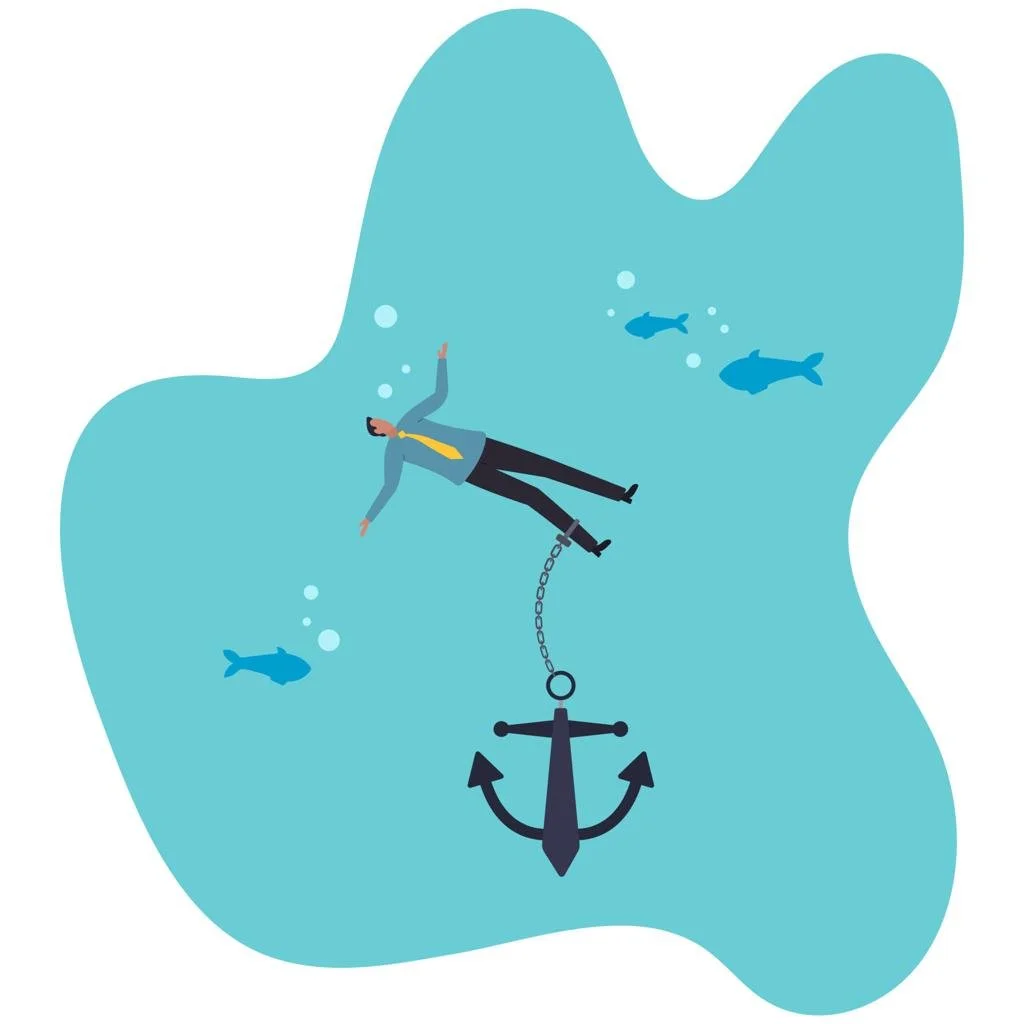
How Personal Financial Planning Helps Avoid the Sunk Cost Fallacy
A solid plan helps you make decisions based on logic, not past spending.
1. Objective Decision-Making Framework
Setting Clear Financial Goals: When your goals are defined, decisions become about moving forward, not justifying the past.
Establishing Investment Criteria: Pre-set conditions for when to sell or adjust investments remove emotion from decisions. If a stock drops below a certain threshold or if the fundamentals change, you have a pre-planned exit strategy.
2. Regular Financial Reviews
Performance Monitoring: Regular check-ins on your financial health can help you spot underperforming assets or unnecessary expenses before they become bigger problems.
Adjusting Strategies: Life happens, and plans need tweaking. Being flexible and willing to adjust your strategy keeps you from sticking with a plan that's no longer serving you.
3. Budgeting and Tracking Expenses
Identifying Money Drains: By keeping tabs on where your money goes, you can spot those pesky subscriptions or investments that aren't providing value.
Reallocating Resources: Freeing up money from unproductive areas means you can invest in opportunities that better serve your financial goals.
Strategies to Mitigate the Impact of Cognitive Biases in Decision-Making
Awareness and Education
Simply knowing about the sunk cost fallacy is half the battle. When you're aware, you can catch yourself in the act. It's like realizing you're in a bad relationship with your cable company—once you see it, you can't unsee it.
Consulting a Financial Professional
At KLD Wealth Management, having an objective perspective helps remove emotional decision-making
Decision-Making Tools
Pros and Cons Lists: Old school but effective. Laying out the benefits and drawbacks without considering past investments can clarify the best path forward.
Financial Models and Projections: Seeing the numbers in black and white can help override emotional decisions.
Setting Predefined Limits
Stop-Loss Orders: For investments, these can automatically sell a security when it reaches a certain price, protecting you from further losses.
Budget Caps: Decide in advance the maximum you're willing to spend on a project or investment.
Real-Life Case Study
Meet Alex: Alex invested in a friend's startup. Despite red flags and continual requests for more funding, Alex kept investing to "protect" the initial investment. After working together, we assessed the business's viability. It wasn't easy, but Alex decided to stop funding the venture, preventing further losses. The freed-up resources were then invested in a diversified portfolio that's now growing steadily.
The Benefits of Overcoming the Sunk Cost Fallacy
Improved Financial Health: By not throwing good money after bad, you can allocate resources to investments with better returns.
Emotional Relief: Letting go of failing investments or expenses can reduce stress and improve your overall well-being.
Greater Flexibility: With more resources at your disposal, you can seize new opportunities as they arise.
Are you ready to break free from the chains of past financial decisions?
Let's turn those sunk costs into lessons learned on your journey to financial success.