
How Well Do You Know Your 401k?
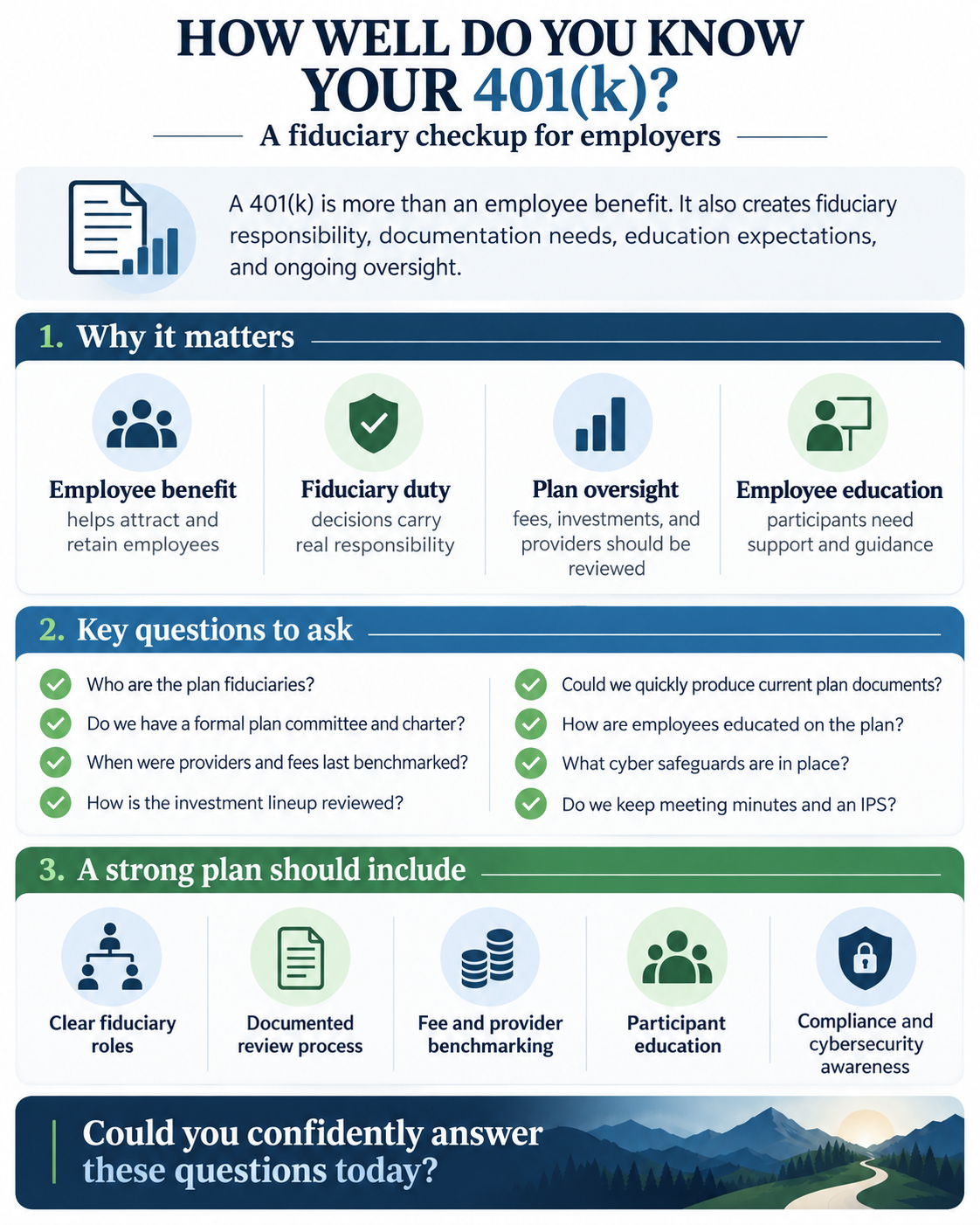
To start off I would like to state that all 401k’s are not created equal. At the time you set up your 401k, you probably saw it as a benefit to help retain the lifeblood of any business (your employees). You were probably advised that it can also be a tool from a tax planning standpoint for your business. These are valid reasons to start a 401k. What you probably were not made aware of is the ongoing work this would entail and potential consequences of not keeping up with the work.
Usually, when the 401k is started, either the owner(s) or the company itself is named in the documents as the fiduciary over that plan. Now depending on who helped you set up the plan and continues to help service that plan, they may also be listed on the documents as a fiduciary. This is vital information to know since you now have liability in that plan. If the person you are working with is not taking responsibility with you, you have a problem. This in plain English means that the people helping you are not standing on the front line with you incase things go south. They are most likely reaping the benefits without the same level of risk.
How exposed is your company’s 401(k) plan?
Answer these questions to see whether you may be acting as a plan fiduciary and whether your retirement plan review process is documented, repeatable, and defensible.
How are decisions being made within the plan?
Is it as simple as the lowest cost wins?
The key to “winning” in my experience when it comes to a 401k, financial planning, or anything with a dollar sign is education.
How is the person you’re working with continuing to grow their understanding of retirement plans or what your employees would get the most value from?
How are they then translating that to you and your employees?
Is it all done through conversations with you?
When they meet with you, have they ever once brought up information they got through conversations with your employees? If they are not educating your employees, that responsibility is on you. Now, you can take on that role if you’d like, but I would ask what are you paying for then?
This leads to my next question and is arguably the most important one. How are they interacting with your employees? In my experience, they tend to focus most of their energy on the person who is paying them. This is great for you. This also means that you are the only properly educated person on the plan the whole company is potentially putting their life savings into. Remember that your advisor works for you. You have an obligation to your employees when you sign those documents to have their back. This means setting expectations for whoever you are working with and putting yourself in your employees' shoes.
I can already hear some people saying, “they won’t care” or “they don’t pay attention to that stuff” and to that I would say it doesn’t matter. Here is the reality; they only have to care once for you to have a problem. If you tell me, I just don’t have the time to devote myself to this, then I think you are ready to have another discussion with the advisor helping you with the plan.
Here are some of the questions we ask any employer when discussing their 401k:
Does your plan include a formal plan committee? If so, does the committee have a charter?
What was the topic of your last fiduciary training meeting?
When was the last time the plan providers were benchmarked? What was the result of the RFPs?
If your plan was audited by the Internal Revenue Service or Department of Labor, would you be able to quickly produce plan documents? If so, when was the last time those documents were verified to be correct?
What is the process utilized by your plan to review investment line-ups?
Who are the fiduciaries of your plan?
Do the plan providers provide safeguards against cyber threats?
How do your current plan providers prevent conflicts of interest?
Do you have a sample of the meeting minutes from your last plan meeting? Last five?
How often is the plan being reviewed?
What are the costs associated with your plan, including providers and investment funds?
How are you informed of regulatory changes that may impact the management of your plan?
What amount of coverage is provided by your fidelity bond?
Do you have a sample of the plan investment policy statement (IPS)?
How is education provided to participants?
Do you have the letters or documentation where the plan has confirmed fiduciaries in writing?
This is a good starting point. If I were to ask you right now, could you confidently answer these questions?