
Understanding the Rule of 72: How Discipline Equals Freedom in Financial Planning
In the world of personal finance, there are many strategies and concepts that can help you grow your wealth and secure your future. One such concept is the Rule of 72, a simple yet powerful tool for understanding the impact of compound interest. When combined with the principle that discipline equals freedom, it can transform the way you approach financial planning.
What Is the Rule of 72?
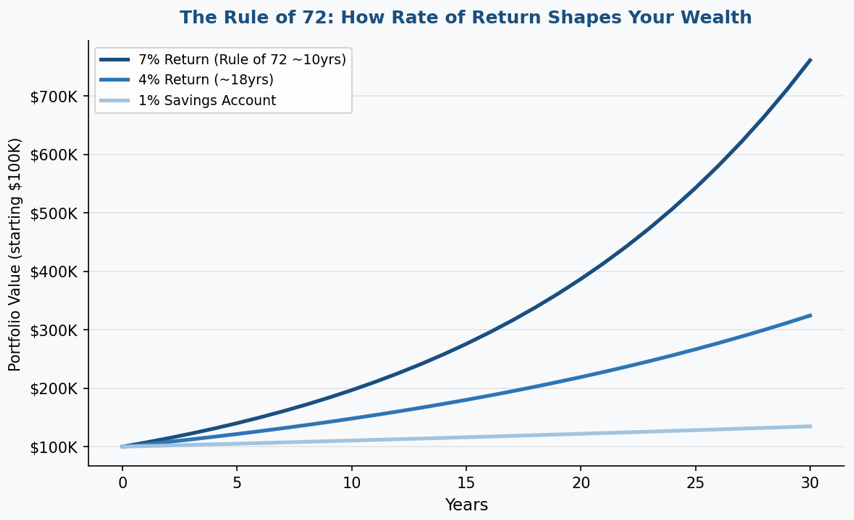
The Rule of 72 is a straightforward formula used to estimate how long it will take for your investment to double in value, given a fixed annual rate of return. Simply divide 72 by your expected annual return, and the result tells you roughly how many years it takes to double your money.
For example, if you have an investment with an annual return of 6%, you would calculate 72 divided by 6, which equals 12 years. Your investment would double in approximately 12 years at a 6% return rate.
Why the Rule of 72 Matters
Simplicity and Clarity: The Rule of 72 provides a quick and easy way to understand the effects of compound interest without complex calculations. It allows you to make informed decisions about where to invest and how to plan for your financial goals.
Power of Compounding: Compound interest is a key factor in wealth accumulation. The Rule of 72 helps illustrate how small differences in the rate of return can have a significant impact over time. Investing at a 7% return rather than 6% will double your money in about 10.3 years instead of 12.
Investment Strategy: Understanding the Rule of 72 can help you set realistic expectations for your investments. It can guide you in selecting investment vehicles that align with your financial goals and time horizon.
Discipline Equals Freedom: The Key to Financial Success
While the Rule of 72 provides a clear picture of how your investments can grow, achieving these results requires discipline. This principle, often captured as "discipline equals freedom," emphasizes that consistent, disciplined actions in managing your finances lead to greater freedom and security in the long run.
Consistent Saving and Investing: Regular contributions to your retirement accounts or investment portfolio are essential. Discipline in saving a fixed percentage of your income and investing it wisely can significantly enhance the benefits of compounding. This steady approach allows you to take full advantage of the Rule of 72 and accelerate your wealth accumulation.
Avoiding Debt: The Rule of 72 works in reverse for debt. Credit card balances at 18% interest double in just four years. Maintaining discipline in your spending and avoiding high-interest debt can prevent financial setbacks and free up more resources for investments that grow over time.
Long-Term Planning: Discipline in sticking to a long-term financial plan, despite market fluctuations or short-term temptations, ensures that you remain on track to achieve your goals. A well-thought-out plan, combined with regular reviews and adjustments, helps you stay aligned with your objectives and benefit from the compounding effects illustrated by the Rule of 72.
Patience and Persistence: Building wealth is a marathon, not a sprint. The discipline to remain patient and persistent, even when short-term results seem modest, is crucial. Substantial growth takes time and consistent effort.
How Personal Financial Planning Can Help
A comprehensive financial plan takes into account the principles of the Rule of 72 and the importance of financial discipline. Here is how working with a fee-only financial planner can enhance your financial strategy:
• Customized Investment Strategies: A financial planner can help you develop an investment strategy tailored to your goals and risk tolerance, ensuring that you take full advantage of compound interest and the Rule of 72.
• Regular Monitoring and Adjustments: Ongoing reviews of your investment performance and financial plan help keep you on track and make necessary adjustments to optimize growth.
• Discipline and Accountability: A financial planner provides the accountability needed to stick to your plan, manage debt, and make consistent contributions to your investments.
The Rule of 72 makes the power of compounding concrete. The discipline to act on it consistently, over time, is what converts that understanding into actual wealth.
At KLD Wealth Management, these principles are embedded in how retirement projections and investment strategies are built for every client.