
Think You're Making Smart Financial Decisions? Recency Bias Might Be Leading You Astray
When it comes to your financial decisions, it’s easy to feel like you’re thinking everything through logically. But if you’re being honest, there are times when recent events start to shape your thinking more than they should. That’s where recency bias comes in.
Recency bias is one of those subtle habits that can quietly influence your decisions without you even noticing. It pulls your attention toward what just happened instead of helping you step back and look at the bigger picture. Over time, that can lead to choices that don’t really line up with your long term goals.
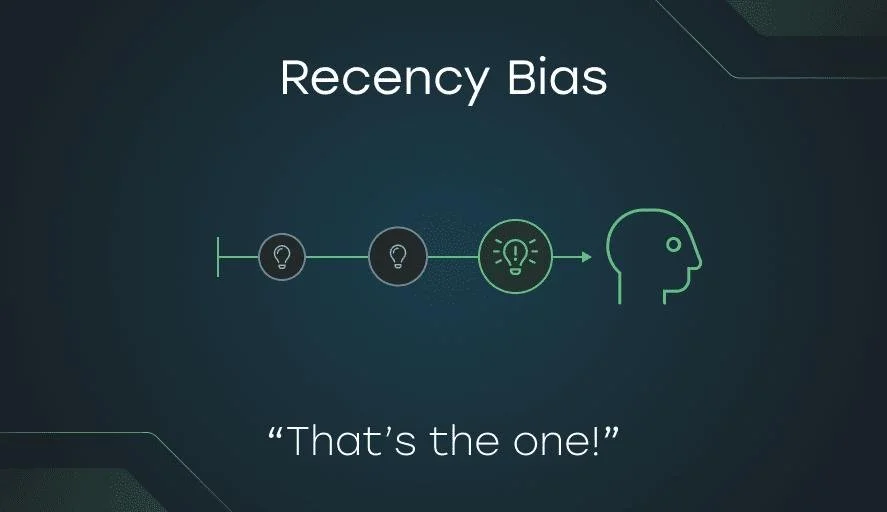
What is Recency Bias?
Recency bias is the tendency to give more importance to recent events than long term data or historical trends.
Think about a time when the market dropped and it felt like everything was going downhill. In that moment, it’s easy to assume the trend will continue. But when you zoom out, markets have always moved in cycles. Focusing only on what just happened can distort how you see what comes next.
How Recency Bias Affects Your Financial Decisions
Recency bias can show up in several areas of your financial life:
Investment Decisions: When an investment has been performing well lately, it’s easy to assume it will keep going. You might feel like you’re getting in at the right time, even if most of the growth has already happened. That can lead to buying high without realizing it.
Real Estate Decisions: During a strong housing market, it can feel like prices will only go up. That pressure can push you to move quickly, sometimes before you’ve fully thought through whether the decision fits your long term plan.
Career and Income Expectations: You might look at what others are earning right now or recent salary trends and let that shape your expectations. While that information matters, it shouldn’t replace a realistic look at your own path and goals.
The Hidden Costs of Recency Bias
Even though recency bias feels natural, it can have real consequences over time:
Missed Opportunities: Selling during a downturn might feel like the safe move, but it can mean missing out on recovery when things turn around.
Increased Risk: Chasing what has been doing well recently can lead you into investments that are already overvalued.
Inconsistent Habits: You might find yourself reacting to short term changes, spending more after gains or pulling back too much after losses.

Avoiding Recency Bias Through Financial Planning
The best way to stay grounded is by having a plan you can rely on, especially when things feel uncertain.
Build a Long Term Plan: When you know what you’re working toward, it becomes easier to ignore short term noise and stay focused on your bigger goals.
Review Regularly: Checking in on your plan helps you stay aligned with where you want to go instead of reacting to what just happened.
Use Reliable Data: Looking at long term trends gives you better context than focusing only on recent performance.
Mitigating the Impact of Cognitive Biases
Recency bias is just one of many biases that can influence your decisions. To reduce its impact, it helps to take a more structured approach:
Use Data Driven Decision Making: Rely on research and long term data instead of making decisions based on short term reactions.
Implement Structured Decision Processes: Having a process in place helps you slow down and think through decisions instead of reacting in the moment.
Diversify Information Sources: Looking at different viewpoints helps you avoid getting stuck in one way of thinking.
Recency bias can pull your attention toward what’s happening right now, but long term success comes from consistency and discipline.
At KLD Wealth Management, the focus is on helping you stay grounded and make decisions that hold up over time, not just in the moment.