
The Ultimate Guide to Financial Planning: Everything You Need to Know
Looking to take control of your financial future? In this guide, we'll cover everything you need to know to make informed decisions and set yourself up for success. Whether you're just starting out or looking to revamp your current financial strategy, we've got you covered.
From budgeting and saving to investing and retirement planning, we'll break down the complex world of finance into practical, actionable steps. At KLD Wealth Management, we work with Gen X and Millennial couples to do exactly this — build comprehensive plans that reflect real life, not just spreadsheets.

Financial planning is the process of aligning your money with your goals. It covers everything from monthly cash flow to retirement income to estate protection.
The Importance of Financial Planning
Financial planning is the cornerstone of achieving financial stability and reaching your long-term goals. Without a well-designed financial plan, it's easy to lose sight of your priorities and make decisions that may not align with your overall financial well-being. Financial planning helps you take control of your money, minimize risks, and make informed choices that will serve you in the present and the future.
Whether you're just starting out, mid-career, or nearing retirement, financial planning provides you with a roadmap to navigate the complexities of personal finance, from budgeting and saving to investing and estate planning.
Key Components of a Financial Plan
A comprehensive financial plan typically includes several key components that work together to create a holistic strategy for your financial well-being:
1. Goal setting: Clearly defining your short-term, medium-term, and long-term financial goals is the foundation of your plan. This could include saving for a down payment on a house, paying off debt, or ensuring a comfortable retirement.
2. Cash flow management: Analyzing your income, expenses, and cash flow patterns is crucial for creating a sustainable budget and identifying opportunities for savings and debt reduction.
3. Investment planning: Developing an investment strategy that aligns with your risk tolerance, time horizon, and financial objectives is key to growing your wealth over time.
4. Risk management: Protecting your assets and income through appropriate insurance coverage, such as life, health, and disability insurance, is an essential part of a comprehensive financial plan.
5. Tax planning: Understanding and implementing tax-efficient strategies can help you maximize your returns and minimize your tax liability.
6. Retirement planning: Determining your retirement income needs, exploring retirement account options, and creating a withdrawal strategy are critical components of a well-rounded financial plan.
7. Estate planning: Developing a plan for the distribution of your assets and the protection of your loved ones in the event of your incapacity or death is an important aspect of financial planning.
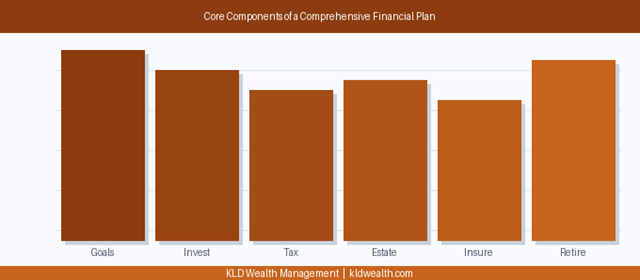
A financial plan has seven core components that work together. Addressing only some of them leaves gaps that can undermine the ones you have addressed.
Setting Financial Goals
The first step in creating a comprehensive financial plan is to set clear, measurable financial goals. Short-term goals might include paying off credit card debt, saving for a down payment, or building an emergency fund. Long-term goals could involve saving for retirement, funding your children's education, or leaving a legacy.
To ensure your goals are effective, make sure they are SMART: Specific, Measurable, Achievable, Relevant, and Time-bound. For example, a SMART goal might be "Save $50,000 for a down payment on a house within the next 5 years."
Budgeting and Managing Expenses
Effective budgeting and expense management are crucial components of a successful financial plan. The first step is to track your income and expenses using tools such as budgeting apps, spreadsheets, or pen and paper. Categorize your expenses into fixed (rent, mortgage, car payments) and variable (groceries, utilities, entertainment) categories to get a better sense of where your money is going.
In addition to budgeting, effective expense management involves finding ways to reduce unnecessary spending and maximize the value of your purchases. This could include negotiating bills, cutting back on discretionary expenses, or taking advantage of discounts and loyalty programs.
Saving and Investing Strategies
The first step in building a savings plan is to establish an emergency fund — a cash reserve that can cover your essential expenses for 3-6 months in the event of an unexpected job loss, medical emergency, or other financial setback. Having a well-funded emergency fund can help you avoid dipping into your long-term savings or taking on high-interest debt during times of crisis.
When it comes to investing, it's important to develop a strategy that aligns with your risk tolerance, time horizon, and financial goals. This may involve a diversified portfolio of stocks, bonds, mutual funds, and other investment vehicles. Regular contributions to retirement accounts, such as 401(k)s and IRAs, can also be an effective way to grow your wealth over time.
Retirement Planning
Retirement planning involves determining your retirement income needs, exploring retirement account options, and creating a withdrawal strategy to ensure a comfortable and financially secure retirement. The power of compounding interest means that the earlier you start saving, the more your money can grow over time.
As you near retirement, it's essential to develop a withdrawal strategy that will provide you with a reliable income stream while minimizing your tax liability and preserving your assets. This may involve a combination of withdrawals from various retirement accounts, Social Security benefits, and other income sources.
Insurance Coverage and Risk Management
Protecting your assets and income through appropriate insurance coverage is a crucial component of a comprehensive financial plan. Some common types of coverage to consider:
1. Life insurance: Provides financial protection for your family in the event of your death, ensuring they can maintain their standard of living and meet their financial obligations.
2. Health insurance: Covers the cost of medical care, including doctor visits, hospitalizations, and prescription drugs, protecting you from the high cost of healthcare.
3. Disability insurance: Replaces a portion of your income if you become disabled and unable to work, helping you maintain financial stability.
4. Homeowner's or renter's insurance: Protects your home and personal belongings in the event of damage, theft, or natural disasters.
5. Auto insurance: Covers the cost of repairs, medical expenses, and liability in the event of a car accident.
6. Umbrella insurance: Provides additional liability coverage beyond the limits of your other insurance policies, protecting your assets in the event of a lawsuit or major claim.
Estate Planning and Wealth Preservation
Estate planning involves the process of arranging for the management and transfer of your assets during your lifetime and after your death, ensuring your wishes are carried out and your loved ones are protected. At the core of estate planning is the creation of a will, which outlines how you want your assets to be distributed upon your passing.
Estate planning also encompasses strategies for minimizing estate taxes and preserving your wealth for future generations. This may include the use of gifting, charitable donations, and other tax-efficient vehicles to transfer assets to your heirs. Remember, estate planning is not just for the wealthy — it's an essential component of a well-rounded financial plan for individuals and families of all income levels.
Finding a Financial Planner or Advisor
When selecting a financial planner or advisor, look for individuals who are certified financial planners (CFPs), as these designations indicate a high level of expertise and adherence to professional standards. Additionally, consider the advisor's investment philosophy, fee structure, and approach to client relationships.
The relationship between you and your financial planner should be one of trust and open communication. A good financial professional will welcome your engagement and work with you to ensure your plan remains aligned with your evolving needs and priorities.
KLD Wealth Management is fee-only and fiduciary — meaning advice is always in your best interest, with no commissions and no product sales. David Wiedmeyer, CFP holds a Master's degree in Personal Financial Planning from Kansas State University and a Bachelor's in Finance from Miami University.
Financial planning is not a one-time event. It is a lifelong journey that requires regular review and adjustment as your circumstances and priorities change.
With the right strategies and a commitment to financial planning, you can unlock a world of possibilities and create the life you've always dreamed of.