
Is Your IRA Quietly Undermining Your Retirement?
For decades, your IRA has been working in your favor—sheltering income, growing tax-deferred, and accumulating quietly in the background. But at some point, the IRS reclaims its stake. Required Minimum Distributions aren't optional, and for many retirees, they arrive as an unwelcome surprise that reshapes the entire tax picture.
The good news: none of this has to catch you off guard. RMDs are predictable, and with the right planning, their impact can be managed.
What Are RMDs and Why Do They Exist?
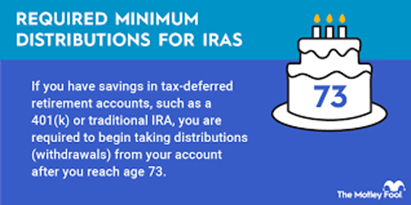
A Required Minimum Distribution is the IRS-mandated minimum amount you must withdraw from traditional retirement accounts like 401(k)s, traditional IRAs, and similar accounts each year once you reach age 73. (Note: this age was recently updated from 72 under SECURE Act 2.0.)
The concept is rather simple: these accounts were funded with pre-tax dollars, and the government eventually wants to collect. The penalty for missing an RMD is a steep 25% of the amount you were supposed to withdraw. Even with that risk, many people are underprepared for what RMDs actually do to their income.
Over 80% of retirees will pay taxes on their Social Security benefits—often because RMDs push their income high enough to trigger those taxes. — Center for Retirement Research
The Problem Isn't Just the Tax—It's the Cascade
RMDs are taxed as ordinary income. In isolation, that might be manageable. But when you layer them on top of Social Security, a pension, rental income, or other retirement income sources, the combined effect can push you into a higher bracket than you were ever in during your working years.
From there, the consequences compound:
• Higher Medicare premiums (IRMAA surcharges apply once income exceeds certain thresholds)
• More of your Social Security benefit becomes taxable
• Reduced eligibility for certain deductions and credits
• A larger-than-expected tax bill that erodes the purchasing power of your retirement income
A report by Fidelity shows that retirees with large IRA balances can see tax rates spike to as much as 46.3%, especially if their RMDs interact with other taxable income sources. This is why understanding RMDs and developing a tax strategy is so crucial.
Three Ways to Reduce the Impact
1. Roth Conversions Before Age 73
Converting a portion of your traditional IRA to a Roth IRA in the years before RMDs kick in is one of the most effective strategies available. Roth IRAs have no RMDs. Money that's been converted isn't subject to mandatory withdrawals, and qualified distributions are entirely tax-free.
The catch: you pay ordinary income tax on the conversion amount in the year you convert. The goal is to do this strategically during lower-income years, often between retirement and when RMDs begin to convert at a rate that doesn't create a bigger problem than the one you're solving. Vanguard estimates that well-timed Roth conversions can save tens of thousands in taxes over the course of retirement.
2. Thoughtful Withdrawal Timing
Don't wait until December 31 to take your RMD. Early, planned withdrawals allow you to coordinate them with other income sources such as Social Security, part-time work, and portfolio distributions in a way that smooths your taxable income across the year and across years. A small change in timing can mean staying in a lower tax bracket.
3. Qualified Charitable Distributions
If you're charitably inclined, a QCD allows you to transfer up to $100,000 per year directly from your IRA to a qualified charity. The distribution satisfies your RMD but doesn't count as taxable income. It's one of the cleanest ways to give and one of the few strategies that simultaneously reduces your AGI(Adjusted Gross Income).
How a Financial Plan Addresses This
RMDs aren't a problem to be eliminated, they're a reality to be planned around. A CFP can create a comprehensive financial plan that looks at your projected RMDs years in advance that models how they interact with your other income sources, and identifies the specific windows where Roth conversions, charitable giving, or withdrawal sequencing can reduce the long-term tax burden.
• Forecasting future RMD amounts so there are no surprises
• Identifying optimal years for Roth conversions based on your tax bracket trajectory
• Coordinating withdrawal strategies across accounts to minimize overall taxes
• Adjusting as tax laws and personal circumstances change
This isn't a one-time exercise: Tax planning for retirement is ongoing which is exactly why having a CFP who knows your full picture makes a real difference.
RMDs are inevitable. The tax impact of poorly planned RMDs is not. The difference between the two is a good strategy.
Don't wait until the distributions are already hitting your return. The earlier you plan, the more options you have. Let's figure out the best path for your situation.